
A Guide to Parking
Parking may seem straightforward, but there are several rules and regulations that motorists may not be aware of, which can lead to unexpected fines.
This guide outlines some of the most common parking rules and regulations in Prospect. By understanding these rules, you can avoid fines and help keep our city safe for everyone.
You can also download our handy guide to parking in Prospect.
Please note that the State Government are responsible for setting the fees applicable to parking fines, not Council.
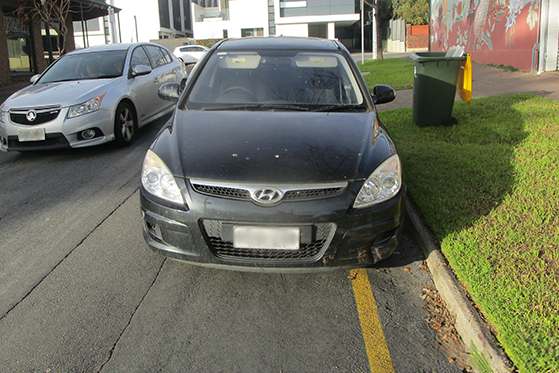
On a continuous yellow line
Parking is not permitted in any areas that have been marked by a continuous yellow line.
These restrictions are implemented to ensure smooth traffic flow and pedestrian safety.
Please respect these regulations at all times to help maintain a safe and efficient road environment.
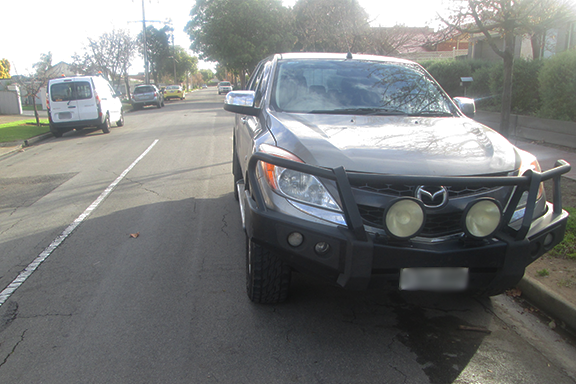
Near a solid white centre line
It’s not only yellow lines you need to check for before parallel parking - look out for white lines too!
A three metre gap needs to be maintained between the side of your car and any solid white line in the centre of the road.
This is to ensure safe passage of motorists through our streets and roads.
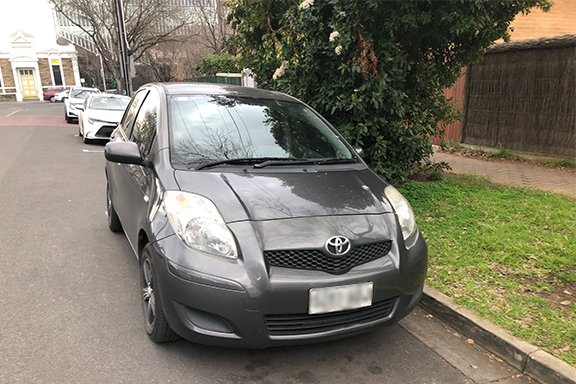
Time limit zones
Some Council-owned car parks and streets include time limit zones to keep car parks available for shoppers and residents and cannot be used for all day parking. In Prospect, most are located on main roads and in side streets nearby main roads. Please check the signs carefully when parking.
These zones are regularly patrolled by our General Inspectors.
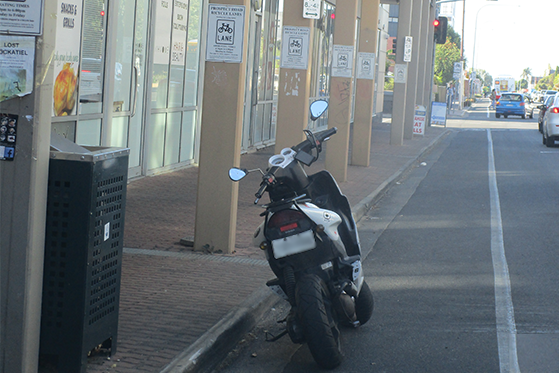
Bicycle lanes and clearways
Bicycle lanes improve road safety for cyclists, motorists, and pedestrians by facilitating smoother traffic flow. They're marked with painted lines, symbols, signs, or the word 'lane'.
Remember, bicycle and clearway lane times vary, so always check the signage. Some lanes operate only during specific hours, which are indicated on the sign. If no times are specified, the lane is always active.
Motorists mustn’t stop or park in clearway or bicycle lanes, except in emergencies, during the designated hours. This includes stopping to quickly drop off or pick up passengers or goods.
These lanes are managed by the Department for Infrastructure and Transport and a severe penalty applies.
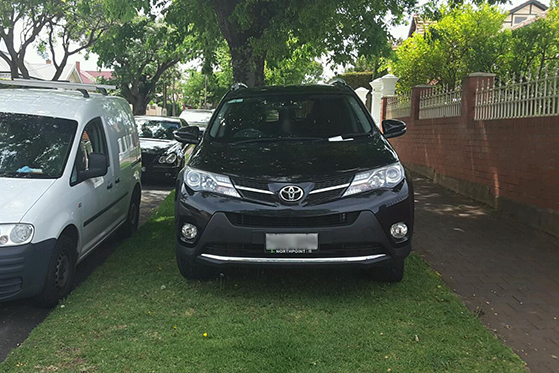
On a nature strip
People often think they’re doing the right thing by parking their car half on a nature strip with two wheels straddling the kerb, particularly where the road is narrow.
While common practice, according to the Australian Road Rules, this is not allowed. Motorists can’t park on a nature verge, footpath, shared path or dividing strip, unless there’s a sign saying otherwise.
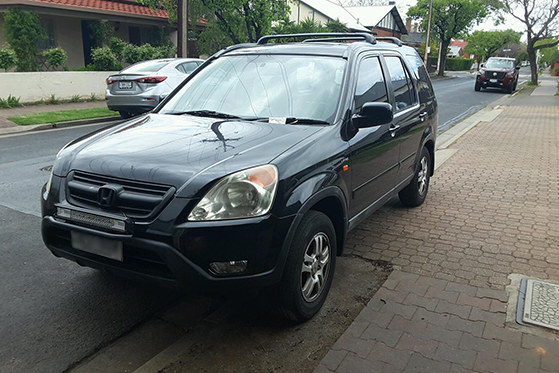
Across a footpath or driveway
You can't park across a driveway, but you can park right up to the edge of a driveway as long as you’re not blocking a vehicle from entering or exiting the driveway.
Be mindful that in narrow streets, parking right up to the edge of a driveway could cause access problems for residents, so be courteous and always consider your surroundings before parking.

Too close to an intersection
If you’re coming around a bend and cars are parked too close to the intersection, it could be dangerous, particularly if passengers are getting in or out of the parked vehicle. Therefore, parking within 10 metres of an intersection is illegal.
If the intersection has traffic lights, this distance increases to 20 metres.
This offense can occur at any intersection unless specifically marked otherwise, regardless of the presence of signage or line markings.

Schools and other no stopping zones
City of Prospect has six schools within the council district, all of which have either a No Stopping area or an area with parking restrictions during school hours in the interest of safety.
Please pay special attention to dropping off or picking up people in areas that are marked with a continuous yellow edge line, as motorists cannot stop in these areas.
Drivers should also avoid obstructing crossing places or entrances as this may impede movement of vehicles.
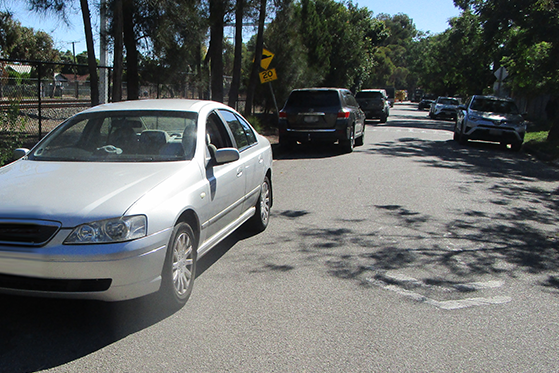
On the wrong side of the road
You can’t drive on the wrong side of the road, and you can’t park there either!
When parallel parking on a road, you must be facing the same direction as moving traffic, otherwise you’re breaking the law.
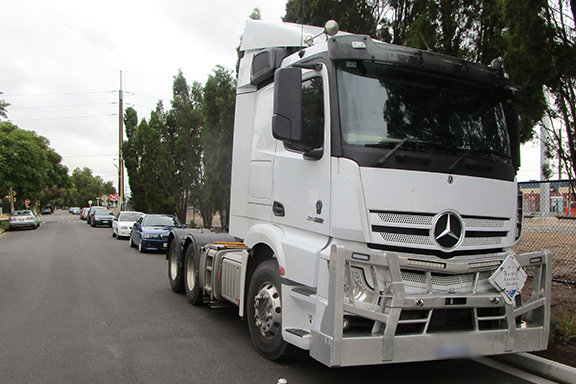
Long or heavy vehicles
Any vehicle exceeding 7.5 meters in length or 4.5 tonnes in weight can’t be parked on City of Prospect roadways for more than one hour.
This includes semi-trailers, trucks and vehicles towing trailers or caravans.
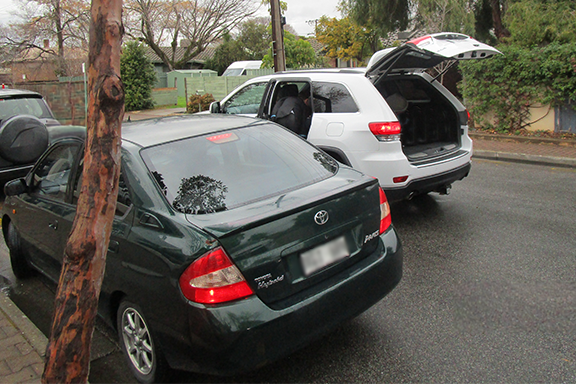
Parallel and double parking
A vehicle is not correctly parked if it isn’t aligned as closely as practical to the kerb.
Double parking is when a vehicle stops between vehicles or in the centre of the road to pick up or drop off passengers. This is a dangerous practice, and an offence.
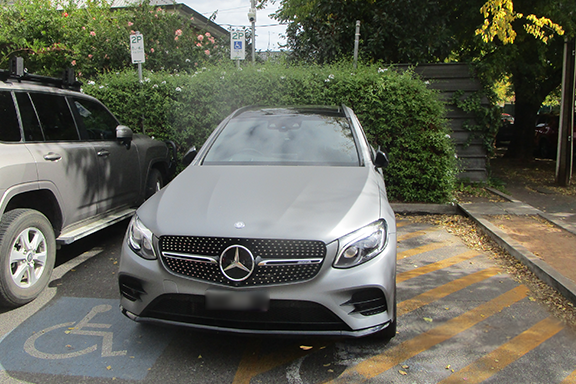
Disabled and permit parking spots
Most car parks have designated parking spaces reserved for holders of a disability parking permit. The permit must be displayed in the vehicle when parked in these spaces to avoid fines.
Disability parking permits can be obtained from the Motor Registration Division of the Department of Transport.
If you would like any more information on parking related matters within City of Prospect, please contact us on 8269 5355 or at admin@prospect.sa.gov.au.